

What is a T-Bone Accident?
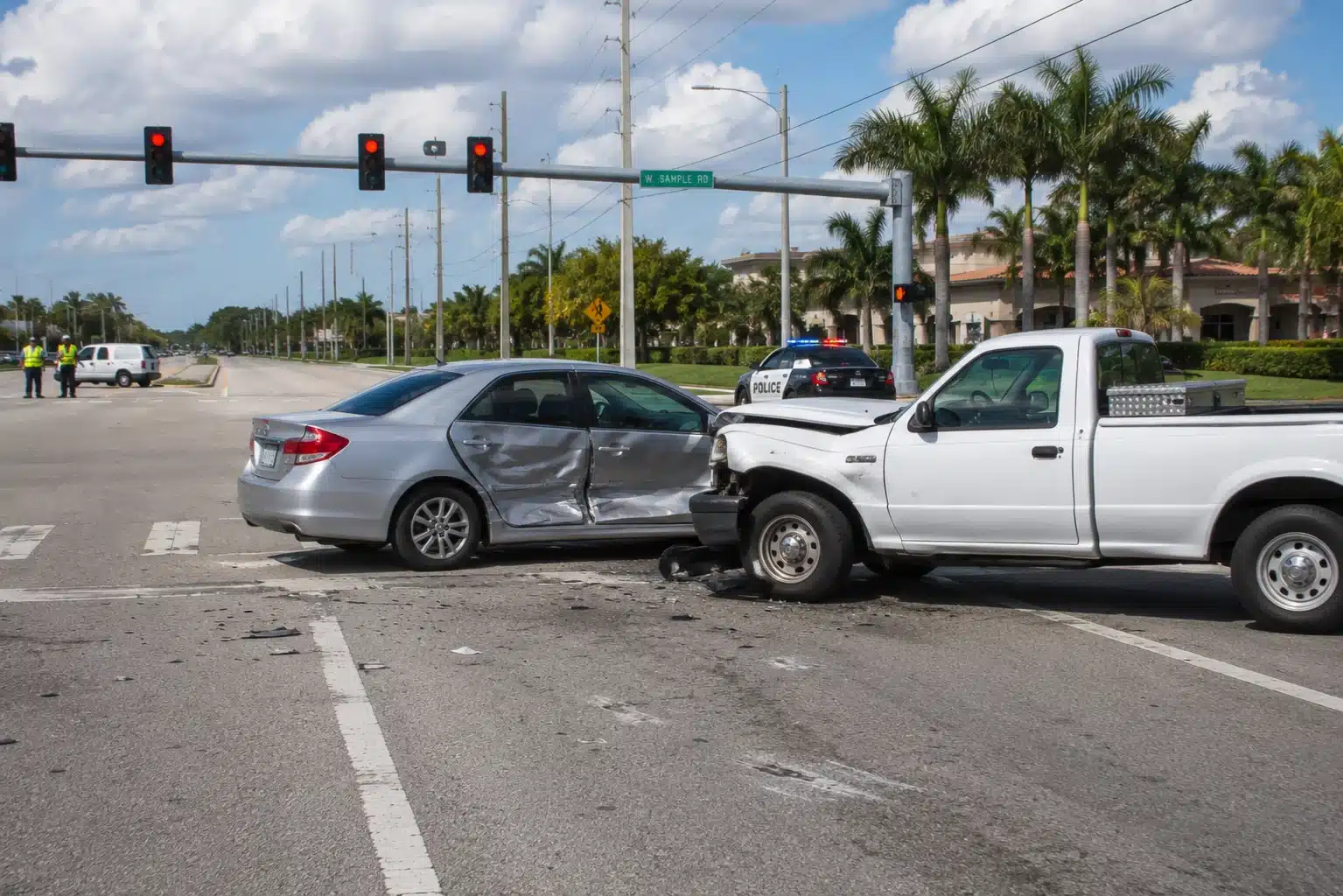
A T-bone accident happens in seconds. One vehicle enters an intersection while another crosses its path, striking it directly in the side. These crashes rank among the most serious because the door panel separating occupants from impact offers far less protection than the front or rear of a vehicle.
Understanding T-bone accidents can help you protect your health, your rights, and your ability to pursue compensation after a crash. Below, we’ll explain what causes these accidents, the injuries involved, how fault is determined, and what steps you can take to protect your claim.
What Does T-Bone Mean in a Car Accident?
So what is a T-bone accident? A T-bone accident occurs when the front of one vehicle strikes the side of another at a perpendicular angle, forming the shape of a “T.” These crashes are also called side-impact or broadside collisions, and they most often happen at intersections where vehicles travel in crossing directions. When a driver fails to stop, yield, or obey a traffic signal, the front of their vehicle can plow into the side of another crossing the intersection.
The name describes the angle of impact, and that angle is what makes these crashes so dangerous. Vehicle sides offer far less protection than the front or rear, which are engineered with crumple zones designed to absorb collision forces. Occupants seated closest to the point of impact bear the greatest injury risk.
Common Causes of T-Bone Accidents
Most T-bone accidents come down to one driver failing to follow the rules of the road at an intersection.
- Running a red light or stop sign: A driver who ignores a traffic signal can enter an intersection directly into the path of a crossing vehicle.
- Failure to yield: This commonly occurs during left turns when a driver misjudges oncoming traffic or proceeds without a safe opening.
- Distracted driving: Looking at a phone, GPS, or another distraction can cause a driver to miss a traffic signal or stop sign.
- Speeding: Higher speeds reduce reaction time and increase the force of impact when a collision occurs.
- Impaired driving: Alcohol or drugs can affect judgment, coordination, and reaction time, increasing the risk of intersection crashes.
- Poor visibility or road conditions: Obstructed views, bad weather, or inadequate signage can contribute to side-impact collisions.
Injuries Commonly Caused by T-Bone Accidents
Because the side of a vehicle provides minimal protection, T-bone accidents frequently result in serious, sometimes life-altering, injuries.
- Head and traumatic brain injuries: Occupants may strike the window, door frame, or other interior surfaces during impact. These injuries can range from mild concussions to severe brain trauma.
- Spinal cord injuries: The force of a side-impact collision can damage vertebrae or the spinal cord, potentially resulting in long-term mobility challenges.
- Broken bones: Fractures involving the ribs, pelvis, hips, and arms are common, particularly on the side of the vehicle that absorbs the impact.
- Internal injuries: Internal bleeding and organ damage may occur even when there are few visible signs of injury immediately after the crash.
- Whiplash and soft tissue injuries: Sudden side-to-side movement can strain muscles, ligaments, and tendons throughout the neck and back.
- Lacerations: Broken glass and damaged vehicle components can cause cuts, facial injuries, and other wounds.
Even crashes that appear minor can produce injuries with delayed symptoms, which is why medical evaluation after any T-bone accident is important.
Who Is at Fault in a T-Bone Car Accident?
Fault in a T-bone accident usually falls on the driver who failed to yield, ran a red light, or otherwise violated the right of way. However, it isn’t always straightforward.
Insurance companies, attorneys, and investigators determine fault by examining the available evidence. This may include police reports, traffic camera footage, witness statements, vehicle damage patterns, skid marks, and the final positions of the vehicles after the crash. In many cases, one driver had the legal right of way while the other failed to obey traffic laws.
Some cases involve shared responsibility. States that follow comparative fault rules may assign a percentage of blame to each driver. If an injured person is found partially responsible, the compensation they can recover may be reduced accordingly.
Because evidence gathering begins immediately after a crash, documenting the scene thoroughly and contacting an attorney early gives you the best chance of establishing what happened and protecting your claim.
What Compensation Can You Recover From a T-Bone Accident?
The value of a T-bone accident claim depends on the severity of injuries, the impact on daily life, and the available insurance coverage, but several categories of damages typically apply.
- Medical expenses: Compensation may cover emergency treatment, hospitalization, surgery, rehabilitation, medications, and future medical care.
- Lost wages: Injured victims may recover income lost while unable to work and, in some cases, compensation for reduced future earning capacity.
- Pain and suffering: These damages address the physical pain, emotional distress, and reduced quality of life caused by the accident.
- Property damage: Claims may include the cost to repair or replace a damaged vehicle and other personal property.
- Wrongful death damages: Surviving family members may be eligible to pursue compensation when a T-bone accident results in a fatality.
An attorney can assess the full value of a claim, including losses that may not be immediately apparent, before any settlement offer is accepted.
What to Do After a T-Bone Accident
The steps taken immediately after a T-bone crash can significantly affect the outcome of any claim that follows.
- Call 911: Request police and medical assistance even if injuries don’t seem serious. An official report creates an important record of the crash.
- Seek medical attention: Get evaluated as soon as possible. Many injuries associated with side-impact collisions don’t produce symptoms right away.
- Document the scene: Take photographs of vehicle damage, traffic signals, road conditions, skid marks, and any visible injuries before vehicles are moved.
- Exchange information: Collect contact information, driver’s license details, insurance information, and witness contact information when available.
- Do not admit fault: Avoid making statements about responsibility or the extent of your injuries before the facts are fully known.
- Contact a car accident lawyer: Speak with an attorney before accepting a settlement offer or providing detailed statements to an insurance company. Ward Law’s team of car accident lawyers in NYC, Orlando, and Miami, FL are available for free consultations to help you understand your options.
Ward Law Is Here to Help After a T-Bone Accident
T-bone accidents rank among the most serious vehicle collisions because occupants absorb direct side-impact forces with little structural protection between them and the point of contact. Understanding how these crashes happen is one thing; determining fault, calculating damages, and negotiating with insurance companies requires a much deeper look at the facts.
At Ward Law, we stand beside injured individuals and families as they navigate the challenges that often follow a serious collision. We offer free consultations, work on a contingency fee basis with no fees unless we win, provide bilingual services in English and Spanish, and represent clients throughout our service areas — including those seeking an Orlando T-bone accident lawyer, a T-bone accident lawyer in Miami, or a New York T-bone accident lawyer.
Call 855-DOLOR-55 or schedule a free consultation today.
